






How to choose a weight bench by type, space and capacity
Start with the type. A flat bench holds one angle, so it suits pressing and dumbbell work and usually takes less room. An adjustable bench changes the back angle, which opens up incline exercises but needs more floor and is often heavier. If flat is enough, look at standard weight benches. If you want incline work, look at adjustable weight benches. Both sit under strength training equipment, where you can compare other gear for the same room.
Next, read the dimensions as depth x width x height, and measure your free wall or corner against them. The FLYBIRD Foldable Flat Weight Bench states 42 x 11 x 18 in. The NICEPEOPLE Adjustable Weight Bench states 46 x 16.7 x 17.2 in. Remember that an adjustable bench in use can be taller than its folded listing suggests. The apartment gym layout guide helps you plan the space around the bench and where it goes when you are done.
Read capacity as headroom. The stated figure should comfortably exceed your body weight plus the dumbbells or bar you lift. The FLYBIRD states 600 lb, the NICEPEOPLE 660 lb and the Relispo Adjustable Weight Bench 1200 lb. A higher number leaves more room to grow as you get stronger, but it does not shrink the footprint. Bench weight matters if you move the bench to store it: the NICEPEOPLE states 17 lb and the Relispo 41.1 lb, so the trade-off is easy handling against capacity headroom.
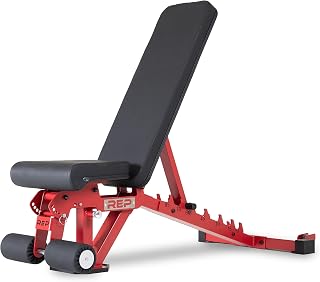
Other eligible benches were left out because each one repeats a role a pick already fills, or leads no need. The REP Foldable Incline Decline Bench states a bench weight of 112 lb and 56.6 x 25.8 x 17.1 in, a much larger footprint than any pick. The XCHIEF Adjustable Weight Bench states 57 x 22 x 22 in and 41.8 lb, so it is bigger and heavier than the picks and offers less capacity than the Relispo. The Marcy Deluxe Utility Bench SB-10510 states 600 lb, which the flat FLYBIRD already covers. For any bench not named here, run the same checks: capacity, dimensions and bench weight.